
Personalized
Home Fitness Training App
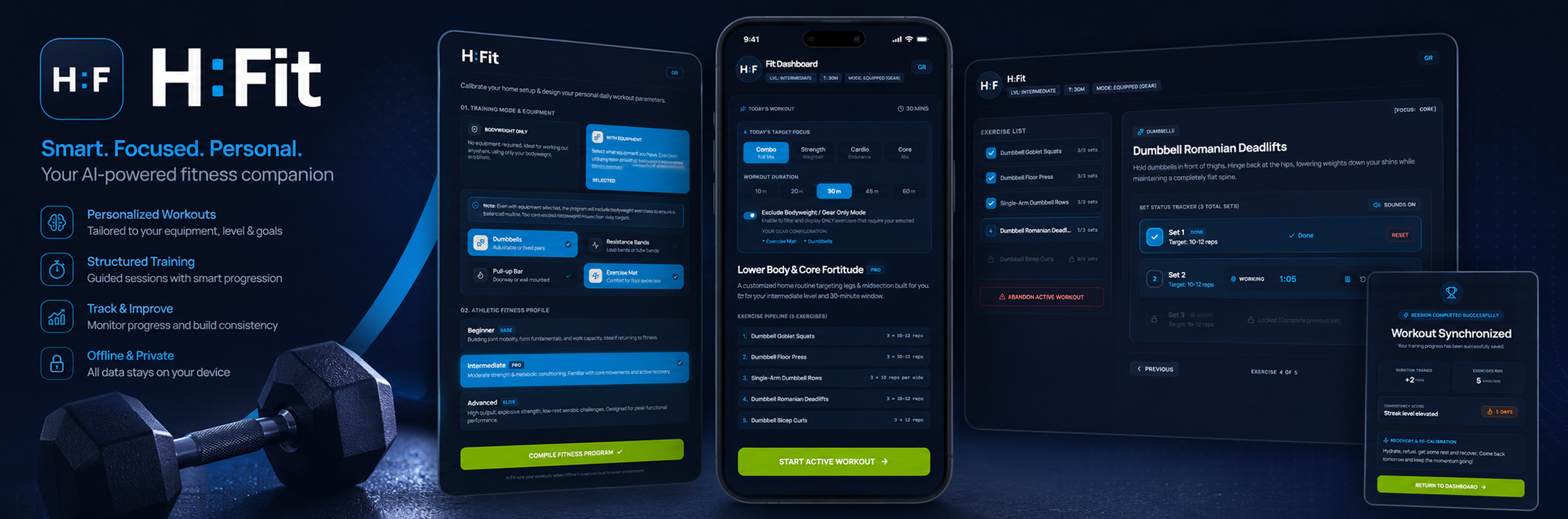
H:Fit is an offline-first fitness training application designed for home workouts. Users can configure their equipment, fitness level and training goals to generate personalized workout routines. The platform guides each session through structured exercises, timers and progression tracking, while maintaining workout history and consistency streaks. Built with React, TypeScript and Tailwind CSS, the project focuses on usability, responsive design and AI-assisted product development.
Project Overview
H:Fit is an offline-first fitness training application designed to help users create and complete personalized home workout routines. Instead of relying on generic plans, the platform allows users to configure their available equipment, fitness level and training preferences to generate structured daily workouts tailored to their needs.
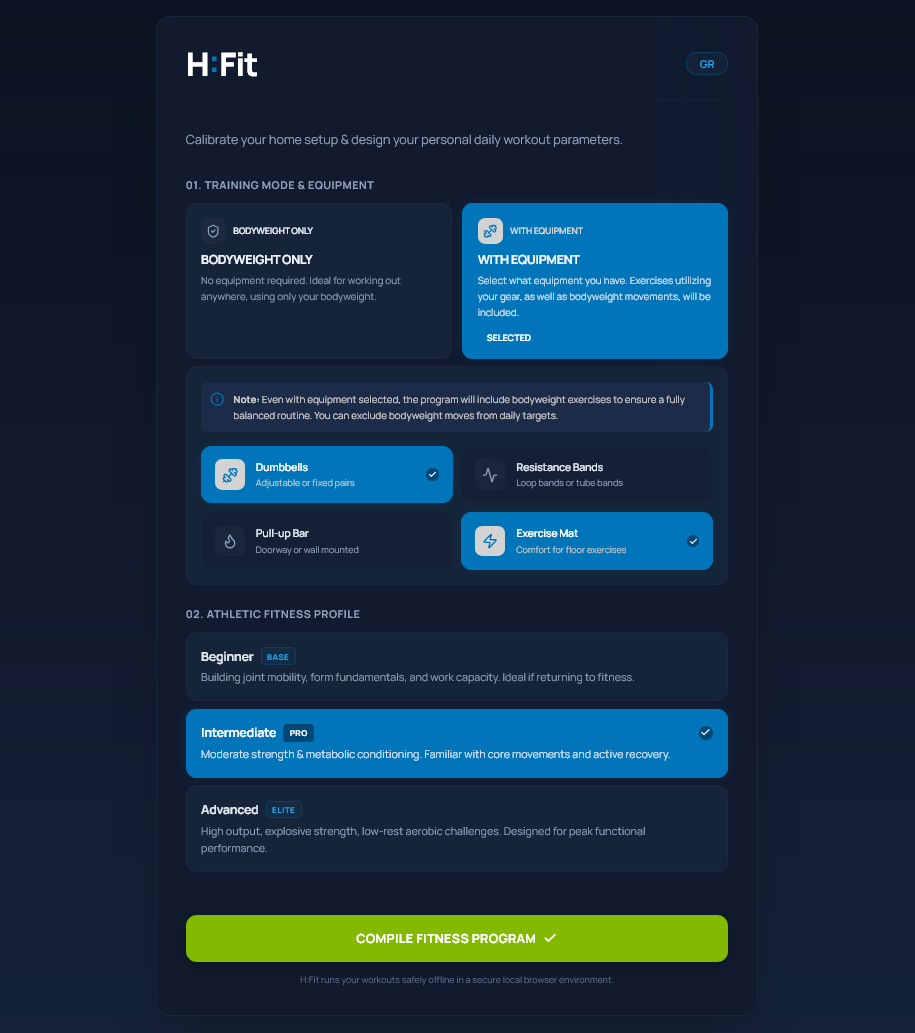
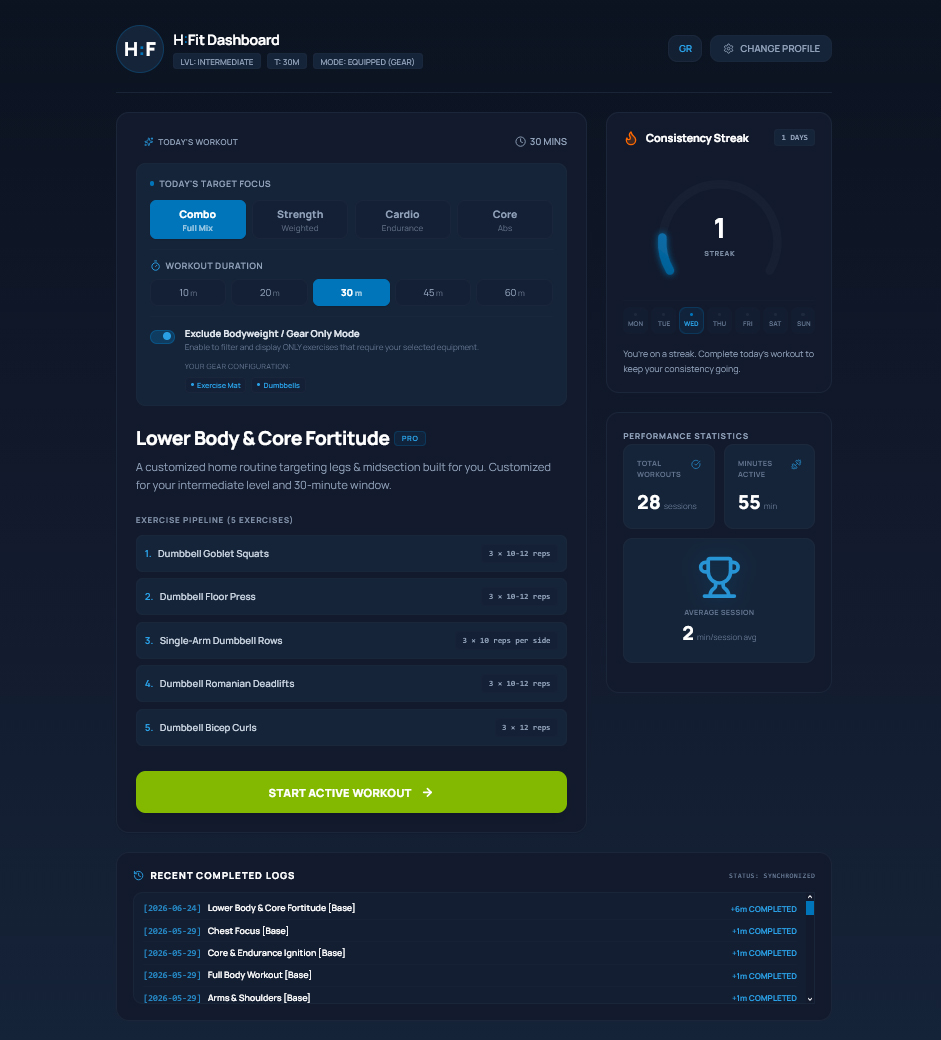
The application combines workout planning, guided exercise execution and progress tracking within a single experience. Users can customize workout duration, select target focus areas such as strength, cardio or full-body training, and follow a step-by-step workout flow supported by exercise timers, set tracking and progression controls.
Built as a fully client-side application, H:Fit uses a local exercise database and workout generation logic running directly in the browser. User preferences, workout history and consistency streaks are stored locally, creating an offline-first experience without requiring accounts, subscriptions or external services for its core functionality.
The Challenge
One of the main challenges was designing a workout generation system capable of adapting to different users and training environments. The application needed to account for factors such as available equipment, fitness level, workout duration and training focus, while consistently producing structured and relevant workout routines tailored to individual preferences.
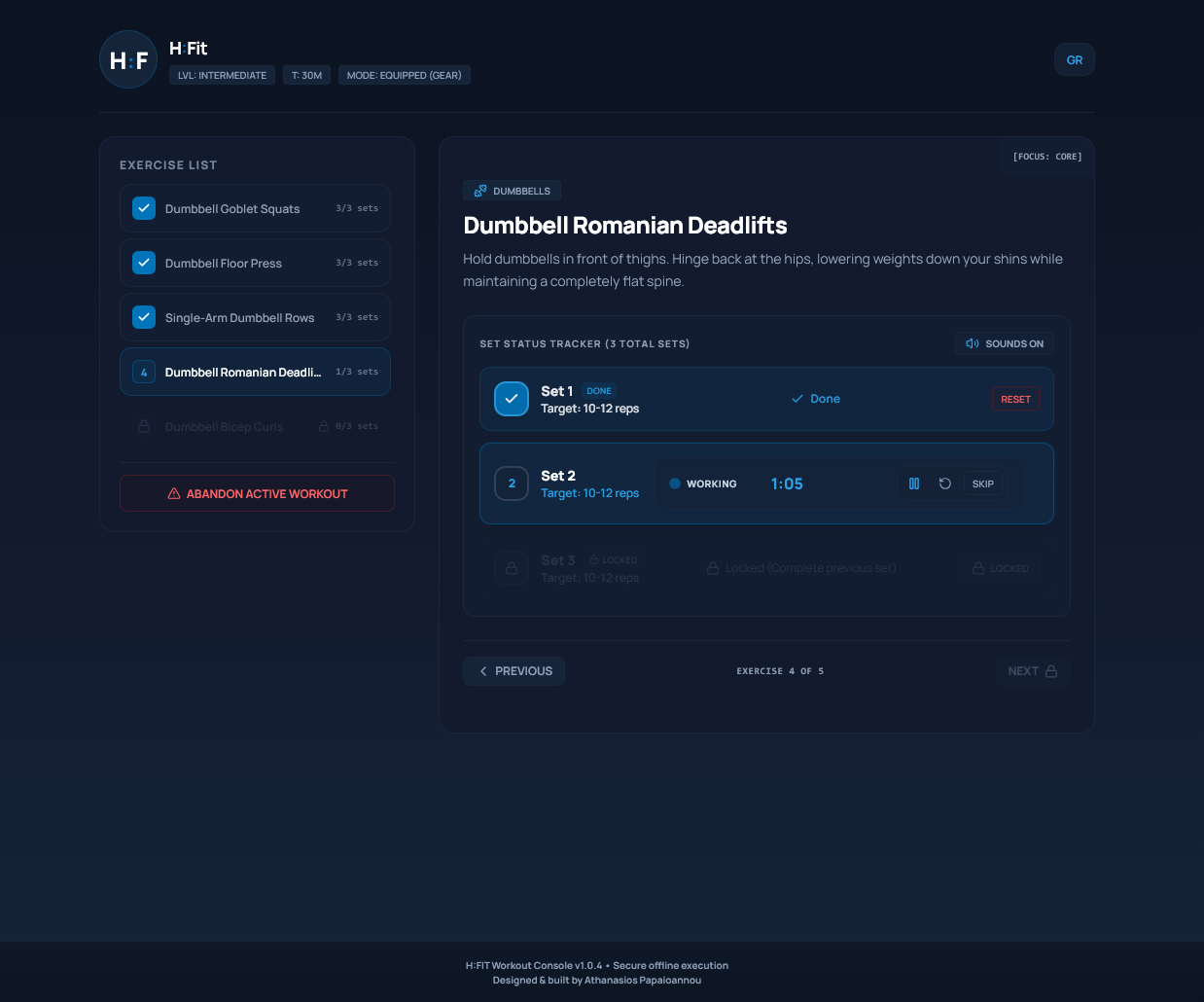
Another challenge involved building a structured workout execution flow. Users needed to be guided through exercises, sets and rest periods without feeling lost or distracted. This required careful consideration of workout progression, exercise locking logic, timer interactions and completion states to ensure that each session felt organized and motivating from start to finish.
From a development perspective, the project also served as an exploration of AI-assisted development and vibe coding workflows. While Google AI Studio provided an initial foundation, significant refinement was required to transform the generated output into a polished product. User interface design, terminology, localization, responsive behavior and interaction patterns were extensively redesigned through iterative prompting and manual code improvements.
The Solution
To address these challenges, I designed H:Fit around a guided workout workflow that balances personalization with simplicity. Users begin by configuring their training environment, available equipment and fitness level, allowing the application to generate structured workout routines tailored to their individual needs. This approach reduces decision fatigue while still providing flexibility and customization.
The workout experience was built around clear progression and focused execution. Exercises are presented in a structured sequence, supported by set tracking, configurable timers and completion states. Progression logic ensures that users move through workouts step-by-step, creating a more organized and engaging training experience while maintaining a clear sense of accomplishment throughout each session.
To support long-term usability, the application was developed as an offline-first, client-side solution powered by a local exercise database and browser-based persistence. Workout history, profile settings and consistency streaks are stored locally, while bilingual localization, responsive layouts and a custom visual design system help deliver an accessible and polished experience across desktop and mobile devices.
Technical Details
Built with:
- React
- TypeScript
- Vite
- Tailwind CSS
- Motion for React
- Lucide for React
Key concepts:
- Component-Based Architecture
- Client-Side State Management
- Offline-First Application Design
- Local Exercise Database & Workout Generation Logic
- Persistent User Preferences & Workout History
- Responsive Mobile-First User Experience
- Bilingual Localization (English / Greek)
- AI-Assisted Development Workflow
Why I Built It
I built H:Fit because home fitness is already a part of my daily routine. I wanted to create a tool that felt practical, focused and genuinely useful for people who prefer training at home. My goal was to design an experience that could help users quickly generate structured workouts, stay consistent and focus on training rather than configuration.
The project also became an opportunity to explore AI-assisted development workflows after completing Google’s AI Professional certification. I wanted to better understand how tools such as Google AI Studio and vibe coding techniques could accelerate product development while still allowing room for critical thinking, design decisions and manual implementation. Rather than relying entirely on generated output, my goal was to iteratively refine and reshape the application into a polished user-focused product.
Ultimately, H:Fit became both a personal fitness tool and a learning project. It allowed me to combine front-end development, user experience design and AI-assisted development practices into a single application that I actively use myself and can confidently share with others.
Interface & Screens
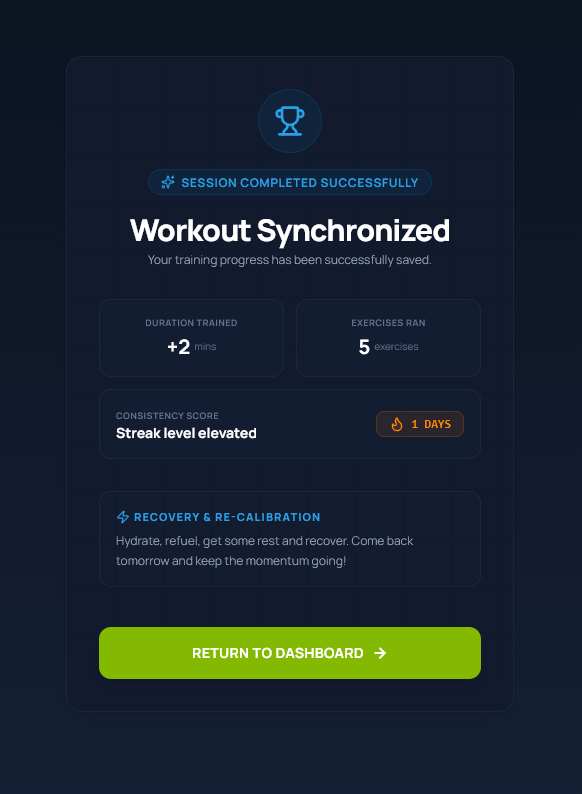
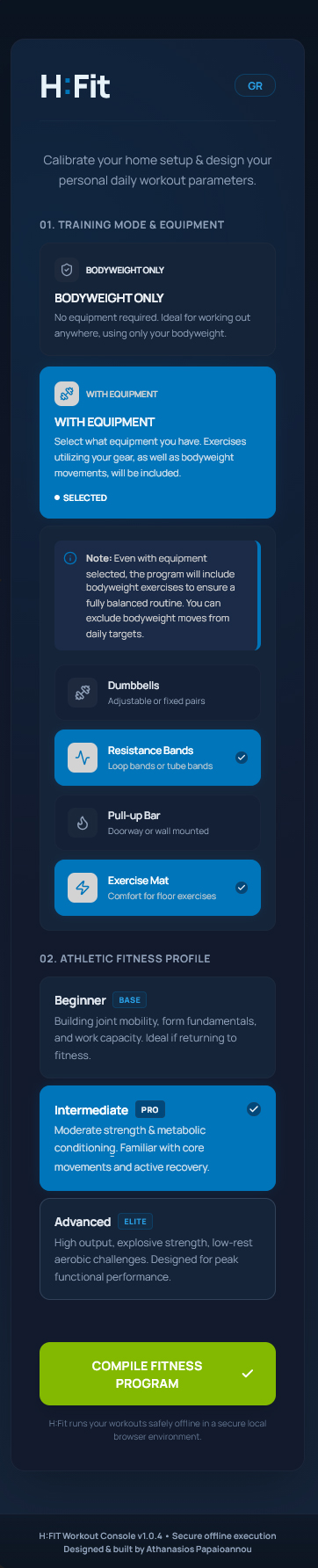
Key Learnings
One of the most valuable lessons from this project was learning how to transform an initial concept into a complete product experience. Beyond implementing features, I gained a deeper understanding of how user flows, interface decisions and interaction patterns contribute to creating an application that feels intuitive and engaging from start to finish.
The project also strengthened my understanding of AI-assisted development workflows. Working with Google AI Studio demonstrated how AI can accelerate development and provide a strong starting point, while also reinforcing the importance of critical thinking, iteration and manual refinement. The most impactful improvements came from continuously evaluating, redesigning and improving the generated output rather than accepting it as a finished solution.
Finally, H:Fit highlighted the importance of product polish and attention to detail. Responsive design adjustments, localization support, visual consistency, microcopy improvements and user experience refinements all played a significant role in the final result. The project reinforced that successful applications are not defined solely by functionality, but by how effectively they combine usability, design and technical implementation into a cohesive experience.
Interested in
working together?
Let’s create something useful and meaningful.