Professional LMS Case Study – WordPress & LearnDash Implementation
This professional case study showcases my experience in building and managing Learning Management System (LMS) platforms using WordPress and LearnDash. It demonstrates the complete implementation process, from course creation and user management to reporting and administrator training. The project reflects real-world workflows I followed across multiple LMS implementations, presented in a demo environment with anonymized data. My goal is to deliver a structured, user-friendly platform that supports both learners and administrators through an efficient learning experience.
Project Overview
Skill Forge Academy is a professional LMS case study based on real-world implementation workflows using WordPress and LearnDash. It demonstrates the complete process of planning, building, and delivering a Learning Management System for organizations that need to manage online training efficiently.
My role extended beyond the technical setup of the platform. I was responsible for structuring courses, organizing users and learning groups, configuring administrator access, and preparing the platform for everyday use. The goal was to create a reliable and easy-to-manage learning environment that supported both learners and administrators.
Although the original LMS platforms were developed as part of my professional experience and remain the property of my previous employer, this demonstration project recreates the same implementation process using fictional content and anonymized data. It focuses on the workflow, technical decisions, and responsibilities involved in delivering a complete LMS solution.
The Challenge
Organizations delivering online training often need more than a simple collection of courses. They require a structured platform where learners, group leaders, and administrators can work together efficiently while tracking progress and managing educational content in one place.
Each LMS implementation started with different requirements, including lists of trainees, group leaders, learning groups, and course materials provided in various formats such as PDF documents and videos. The challenge was to transform this information into a well-organized learning environment that was easy to manage and simple for users to navigate.
Another important aspect was ensuring that administrators and group leaders could confidently use the platform after delivery. Beyond the technical implementation, the project required a clear structure, reliable user management, reporting capabilities, and a smooth onboarding process so that the client could independently manage the system.
The Solution
To address these requirements, I designed and implemented a structured Learning Management System using WordPress and LearnDash. The platform was organized around courses, learning groups, user roles, and progress tracking, providing a clear and scalable learning environment for both administrators and learners.
The implementation included creating course structures, organizing educational content, managing users and group leaders, configuring access permissions, and preparing reporting features. Every part of the platform was designed to simplify daily administration while providing learners with an intuitive and consistent learning experience.
The project extended beyond the technical implementation. After the platform was completed, I provided administrator onboarding and guidance on how to manage users, monitor learner progress, generate reports, and maintain the platform independently. The result was a complete LMS solution that combined technical implementation with practical usability.
Technical Details
Built with:
- WordPress
- LearnDash LMS
- Advanced Custom Fields (ACF)
- Single Sign-On (SSO)
- SCORM Integration
- User Management & Import Tools
Key concepts:
- LMS architecture and course organization
- User roles and permissions management
- Learning groups and group leaders
- Course creation and content structuring
- Progress tracking and reporting
- Administrator onboarding and training
- Secure user authentication (SSO)
- Scalable learning platform implementation
Why I Built It
Throughout my professional experience, I participated in the implementation of multiple Learning Management Systems for different organizations. Since these platforms were developed as part of my previous employment, they remain proprietary projects and cannot be presented publicly in my portfolio.
I created Skill Forge Academy as a professional case study to demonstrate the implementation process behind those real-world LMS projects. Rather than recreating a production platform, my goal was to showcase the planning, technical decisions, workflows, and responsibilities involved in delivering a complete learning management solution.
All screenshots are taken from a demonstration environment using fictional content and anonymized data. This allows me to present my experience while respecting project confidentiality and user privacy.
Interface & Screens
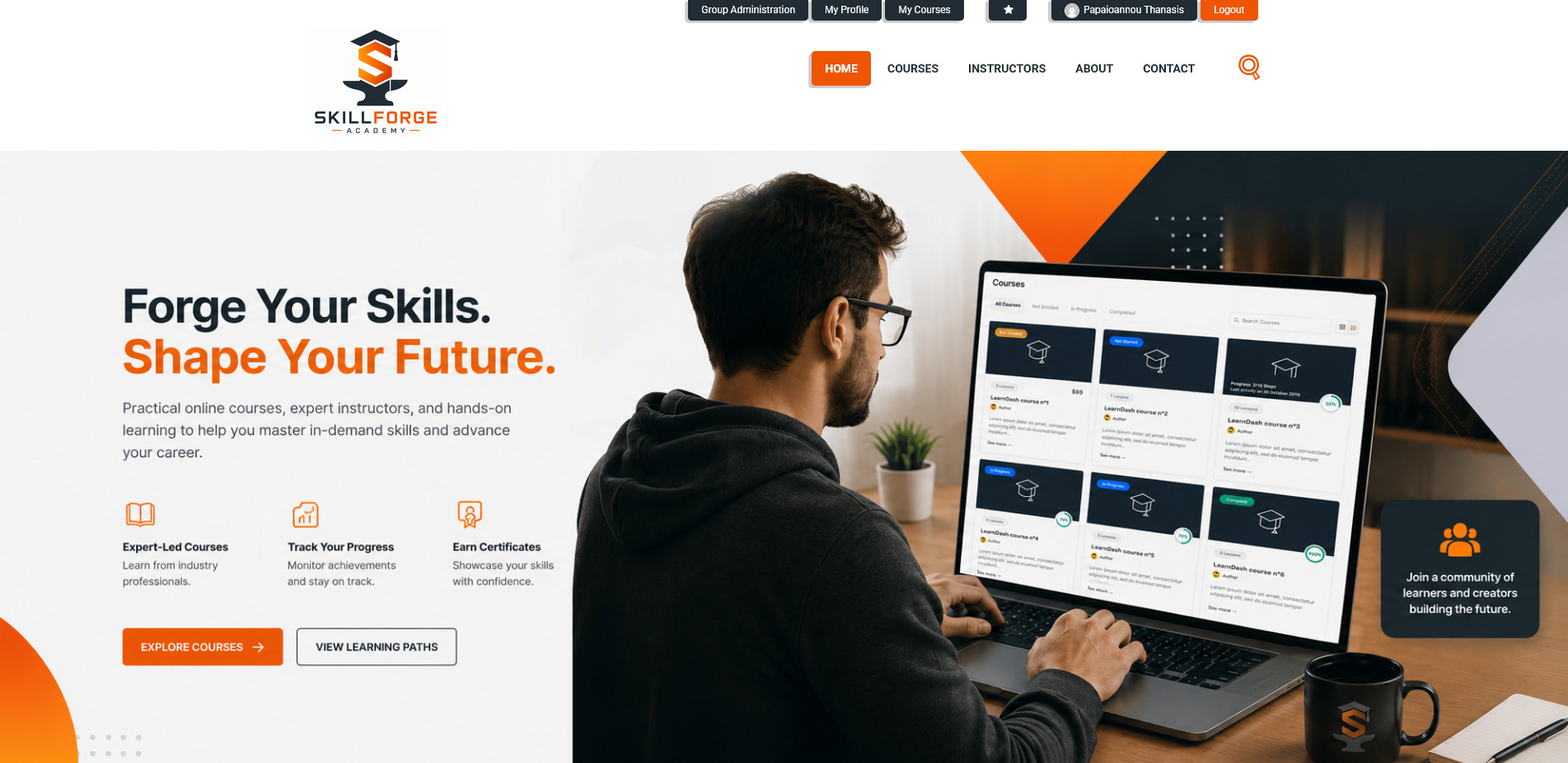
Demo LMS hero section presenting a structured learning environment designed for learners, administrators, and group leaders.
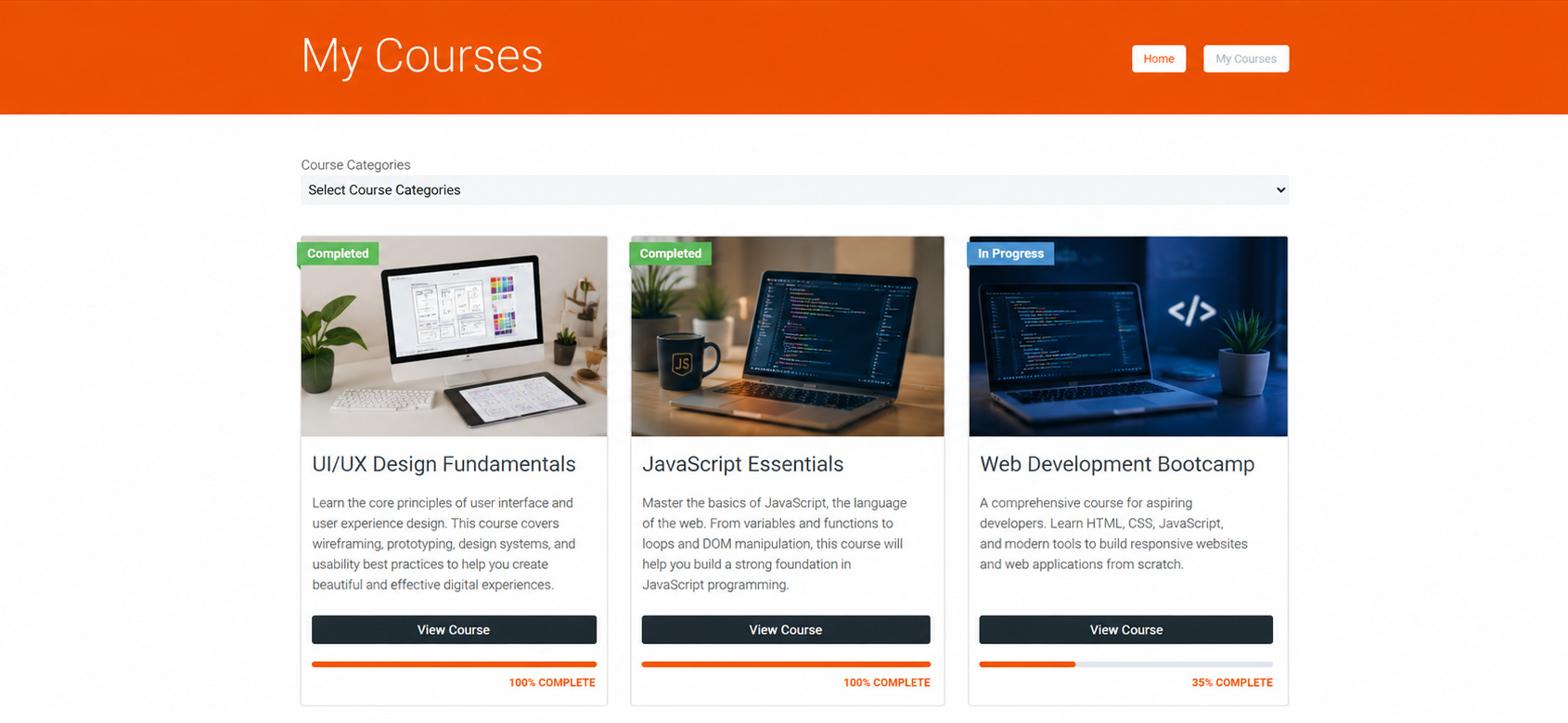
Personalized course dashboard where learners can access enrolled courses, monitor their progress, and continue their learning journey.
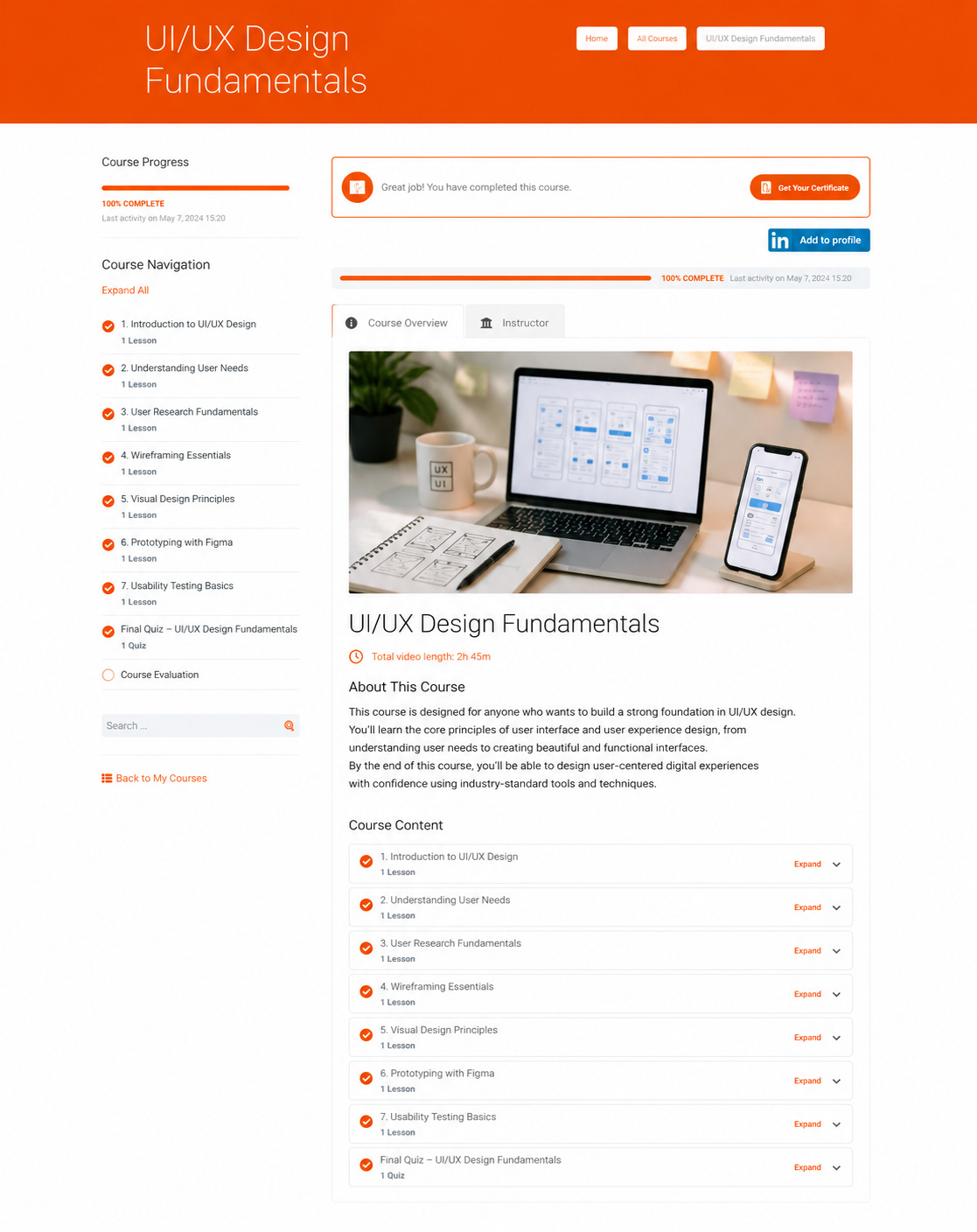
Example of a structured course page combining learning materials, lesson organization, and intuitive navigation.
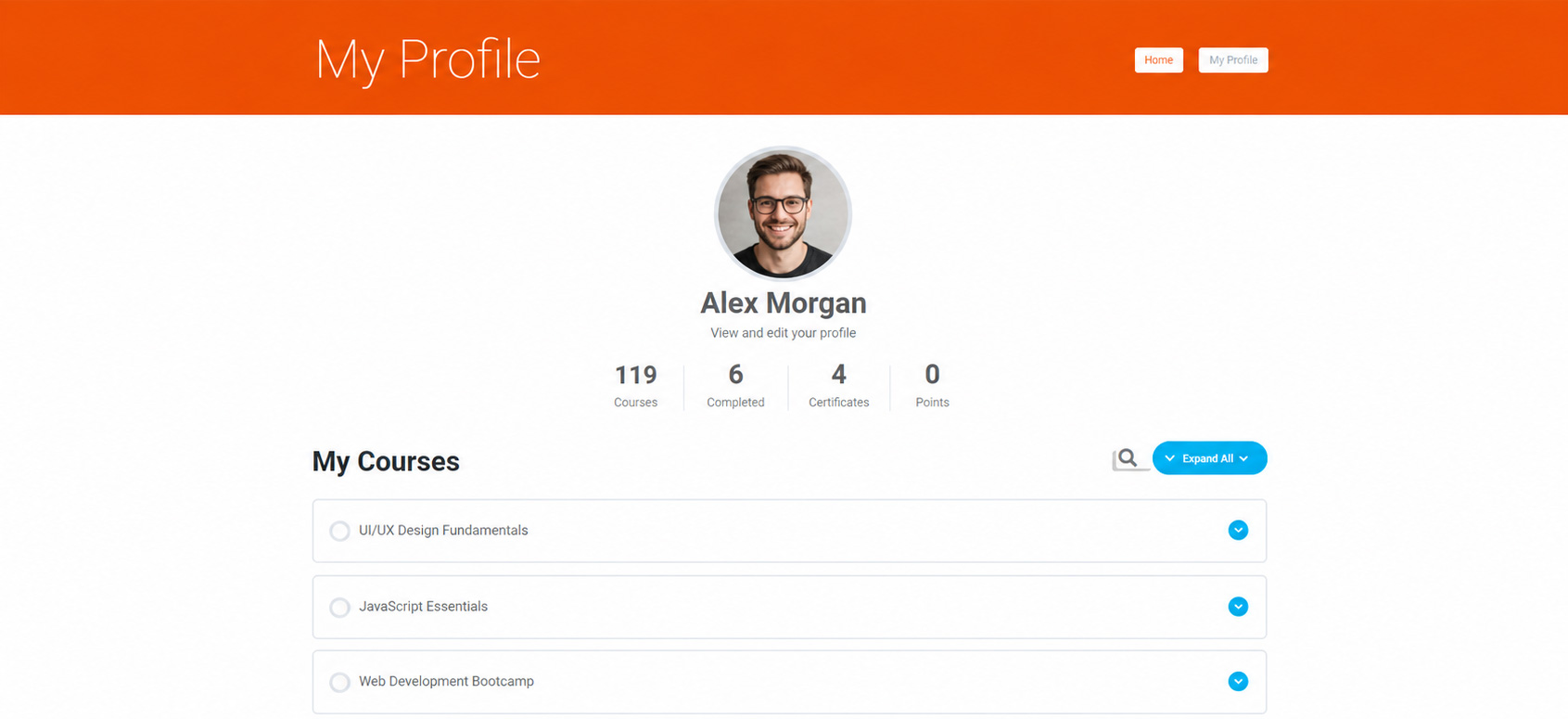
User profile designed to provide quick access to personal information, enrolled courses, and learning activity.
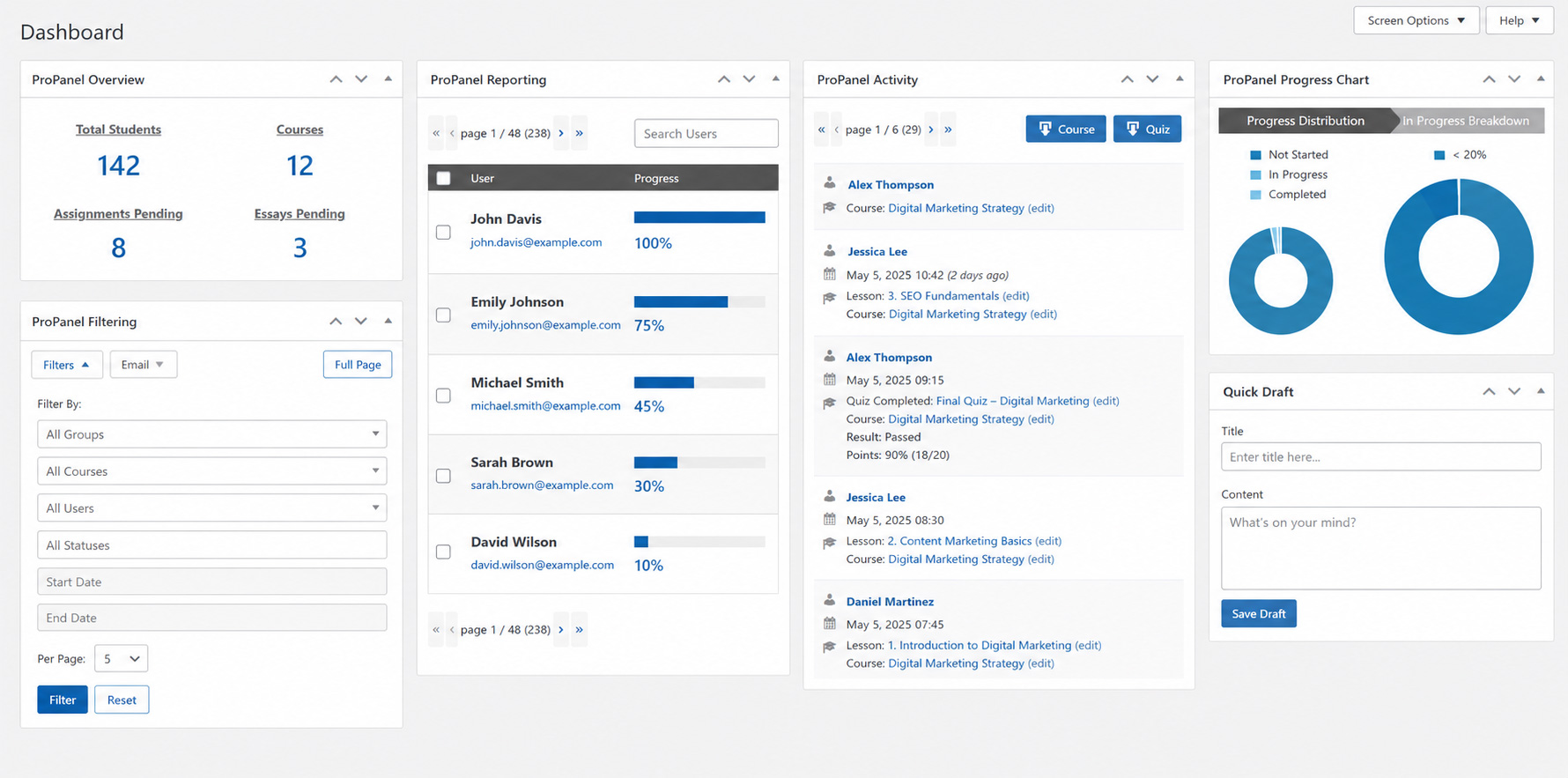
Administrative dashboard providing progress tracking, reporting, and learning analytics to support efficient LMS management.
Implementation Workflow
A structured implementation process followed to deliver a complete Learning Management System.
①
Client Requirements
Receive trainees, groups, learning material
②
LMS Planning
Design the platform structure and learning flow
③
Course Creation
Organize lessons, topics and educational content
④
User Management
Import learners, assign groups and group leaders
⑤
Platform Configuration
Configure permissions, reporting and integrations
⑥
Testing
Verify user access and learning experience
⑦
Administrator Training
Guide administrators on reports and platform management
⑧
Project Delivery
Deliver a complete LMS ready for everyday use
Key Learnings
Building a successful Learning Management System involves much more than configuring a platform. Every implementation reinforced the importance of understanding the client’s training process, organizing content effectively, and designing a structure that is easy to manage as the platform grows.
Another valuable lesson was that user experience extends beyond learners. Administrators and group leaders also need intuitive tools to manage users, monitor progress, and generate reports confidently. Providing clear onboarding and documentation was just as important as delivering the technical solution itself.
This case study reflects how I approach LMS implementation as a complete process rather than a collection of technical tasks. From planning and platform configuration to user management, reporting, and client training, every step contributes to building a reliable learning environment that supports long-term success.
Project Note
This case study is based on workflows I followed while implementing multiple LMS platforms during my professional experience. The original systems are proprietary and owned by my previous employer. To respect confidentiality, this project has been recreated as a demonstration environment using fictional content and anonymized data while preserving the real implementation process.
Interested in
working together?
Let’s create something useful and meaningful.