Airbus A320 Checklist App
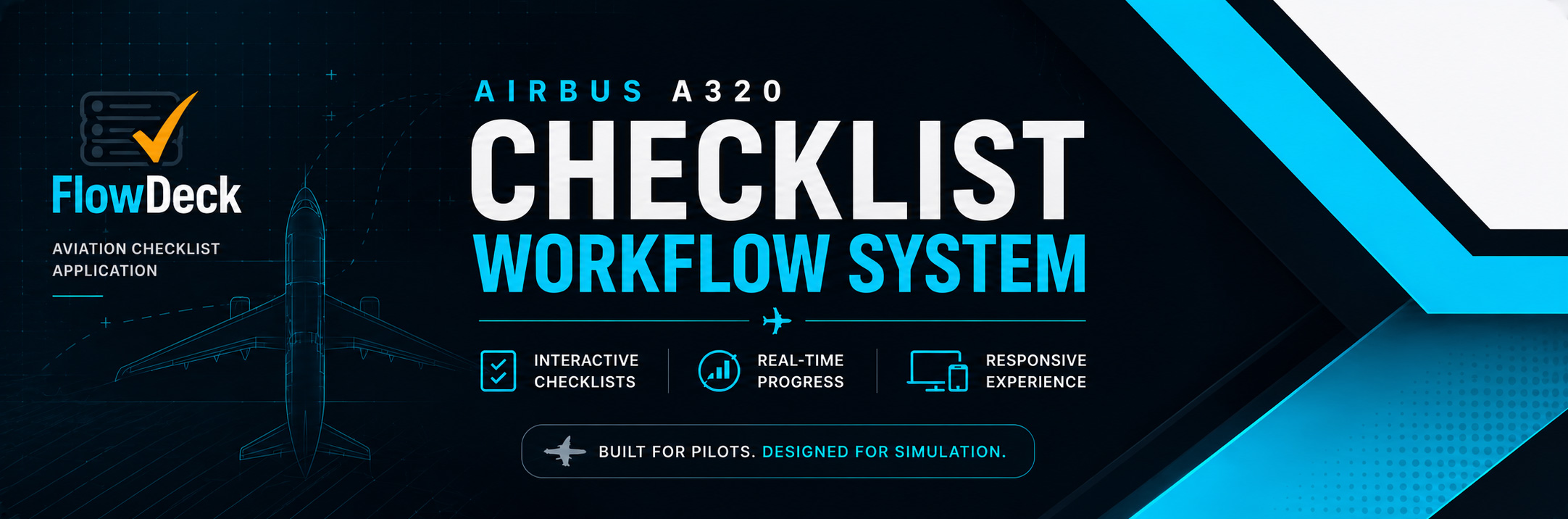
FlowDeck is a React-based aviation checklist application inspired by Airbus A320 procedures. It guides users through each phase of flight using structured workflows, progress tracking, and sequential navigation. Designed with a responsive interface and aviation-focused UX, FlowDeck provides an interactive and intuitive checklist experience for flight simulation enthusiasts.
Project Overview
FlowDeck is an aviation-inspired checklist application designed to guide users through the various phases of an Airbus A320 flight. The project was created to provide a structured and interactive workflow experience for flight simulation enthusiasts, transforming traditional paper or static checklists into a modern digital solution.
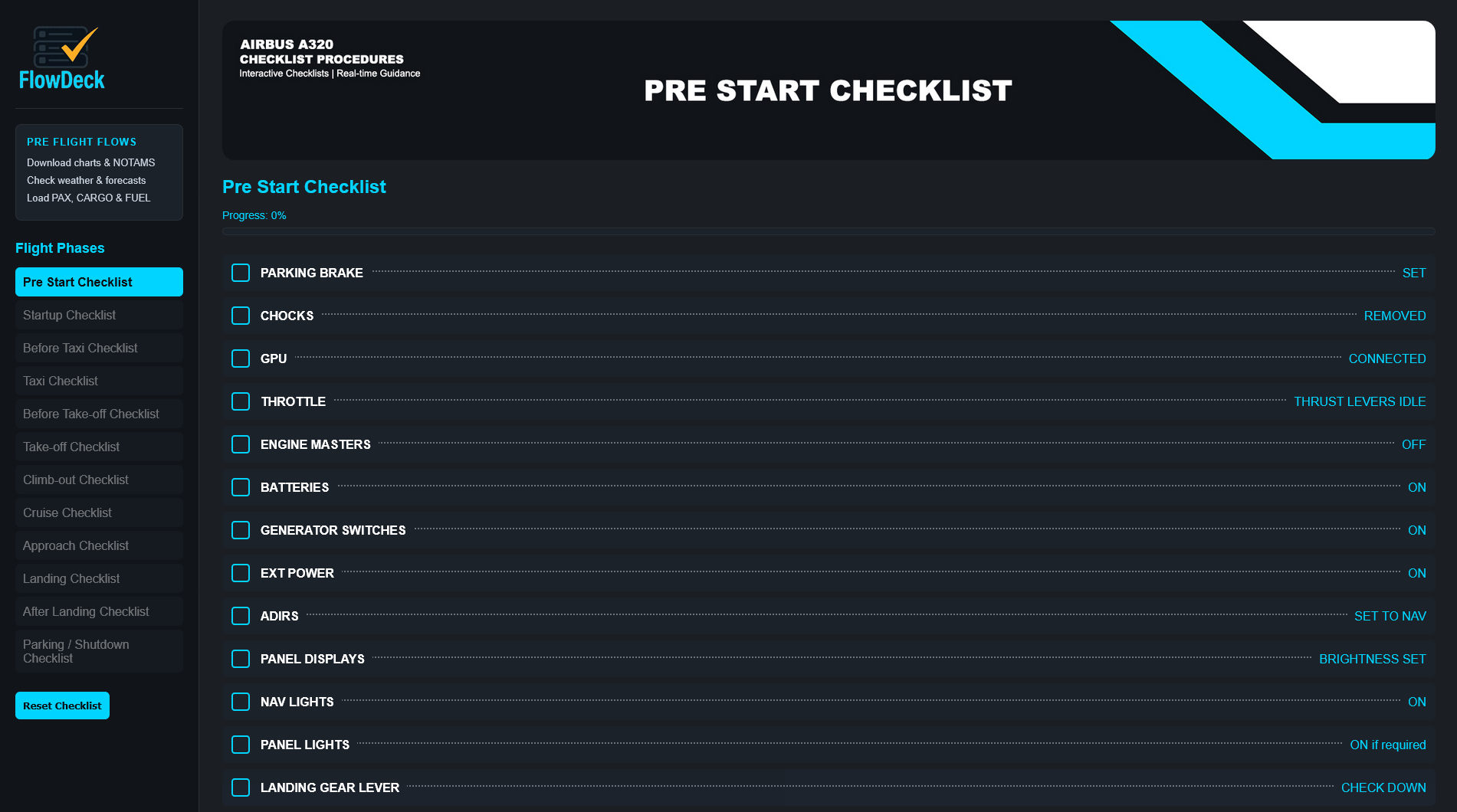
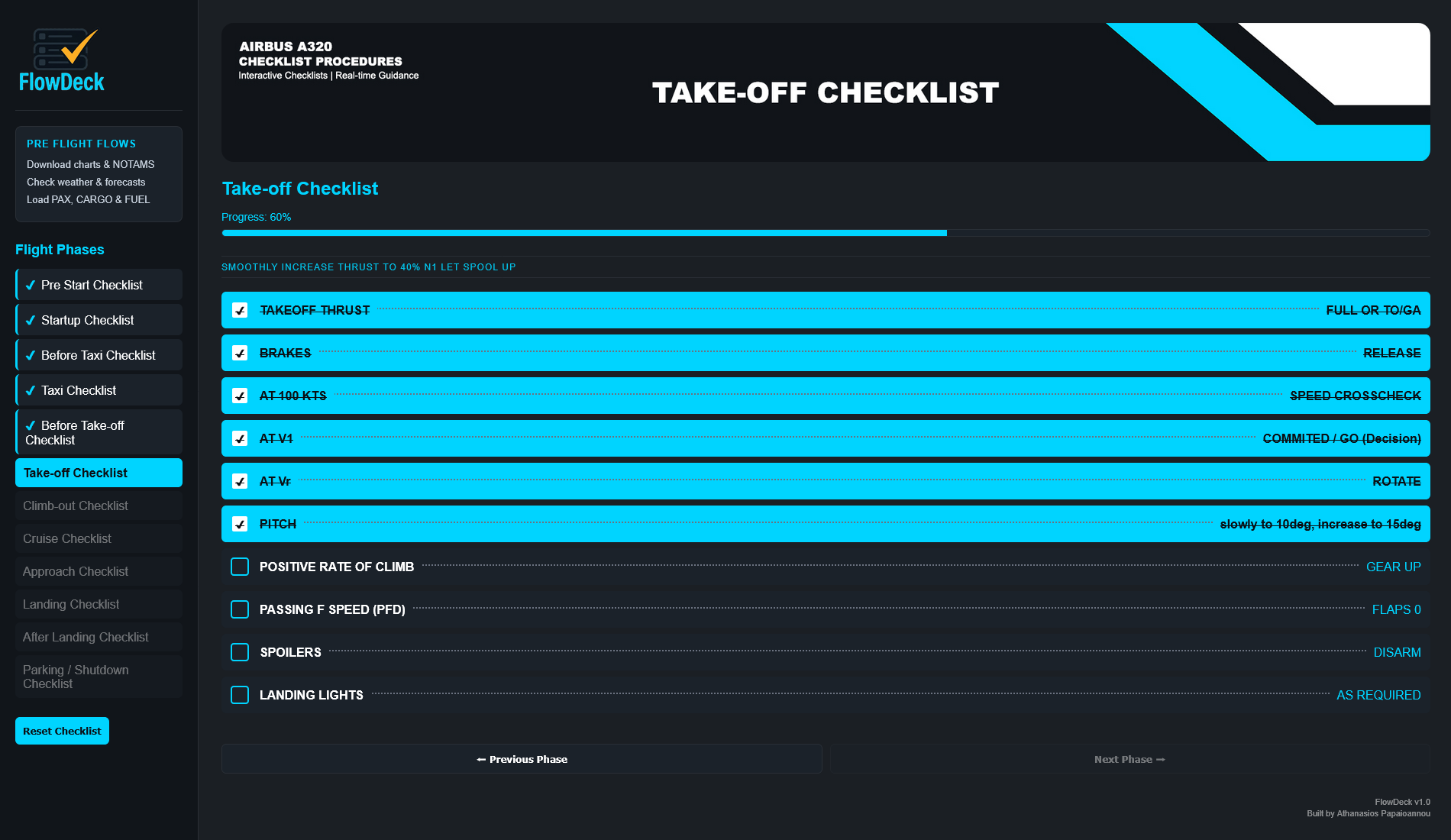
The application organizes procedures into sequential flight phases, allowing users to progress step-by-step from pre-start preparations to aircraft shutdown. Progress tracking, phase locking, and interactive checklist items help ensure that procedures are completed in the correct order, creating a more realistic and immersive experience.
Built with React and JavaScript, FlowDeck focuses on clean component architecture, responsive design, and user experience. The project also includes local data persistence, allowing users to resume their progress between sessions, while a custom aviation-inspired interface and branding help create a professional Electronic Flight Bag (EFB) feel.
The Challenge
One of the main challenges of this project was translating real-world Airbus A320 procedures into a structured digital workflow. Flight checklists contain numerous steps spread across different phases of flight, and the application needed to present this information in a clear and intuitive way without overwhelming the user.
Another challenge was maintaining procedural accuracy while keeping the experience simple and accessible. Instead of replicating highly detailed airline operations, the goal was to create a streamlined workflow suitable for flight simulation enthusiasts, balancing realism with usability.
From a technical perspective, the project required managing checklist state across multiple flight phases, implementing progress tracking, phase locking, responsive navigation, and persistent data storage. These features needed to work together seamlessly to create a smooth and consistent user experience across desktop and mobile devices.
The Solution
To address these challenges, I designed and developed FlowDeck as a phase-based aviation workflow application. The checklist was organized into distinct flight phases, allowing users to progress through procedures in a structured and logical sequence. This approach helps maintain focus, reduces cognitive load, and creates a workflow that closely resembles real-world cockpit operations.
The application includes interactive checklist items, progress tracking, and phase-locking functionality to guide users through each stage of the flight. Users can only advance once all required actions within the current phase have been completed, ensuring procedural consistency while providing clear visual feedback throughout the experience.
To enhance usability, the interface was designed with a responsive layout that adapts seamlessly across desktop, tablet, and mobile devices. Additional features such as local progress persistence, custom aviation-inspired branding, phase navigation controls, and contextual UI elements contribute to a polished experience that feels closer to a dedicated Electronic Flight Bag (EFB) application than a traditional checklist tool.
Technical Details
Built with:
- React
- JavaScript (ES6+)
- CSS3
- Vite
- Local Storage API
Key concepts:
- React Components
- Props & State Management
- Conditional Rendering
- Event Handling
- Local Storage Persistence
- Responsive UX Design
- Component-Based Architecture
- Dynamic UI Updates
Why I Built It
FlowDeck was not created solely as a portfolio project. As a long-time flight simulation enthusiast, I built the application to solve a real need within my own workflow while flying the Airbus A320 in simulation environments.
After completing the project, I shared it with members of the flight simulation community, where it could be used by other enthusiasts looking for a structured and interactive checklist experience. Building something that I personally use and can also provide value to others made the project especially rewarding.
Interface & Screens

Key Learnings
This project helped me strengthen my understanding of React fundamentals by applying them to a real-world workflow application. Building FlowDeck provided hands-on experience with state management, component communication, conditional rendering, and persistent data storage using the Local Storage API.
One of the most valuable lessons was learning how small UX decisions can significantly improve the overall user experience. Features such as progress tracking, phase locking, responsive navigation, and workflow-based interactions demonstrated the importance of designing user flows rather than simply building interfaces.
The project also reinforced the value of planning component structure, organizing application data, and progressively enhancing a product through iteration, testing, and continuous refinement.
Interested in
working together?
Let’s create something useful and meaningful.